
AGE Research Group at BGS Spring Meeting 2026
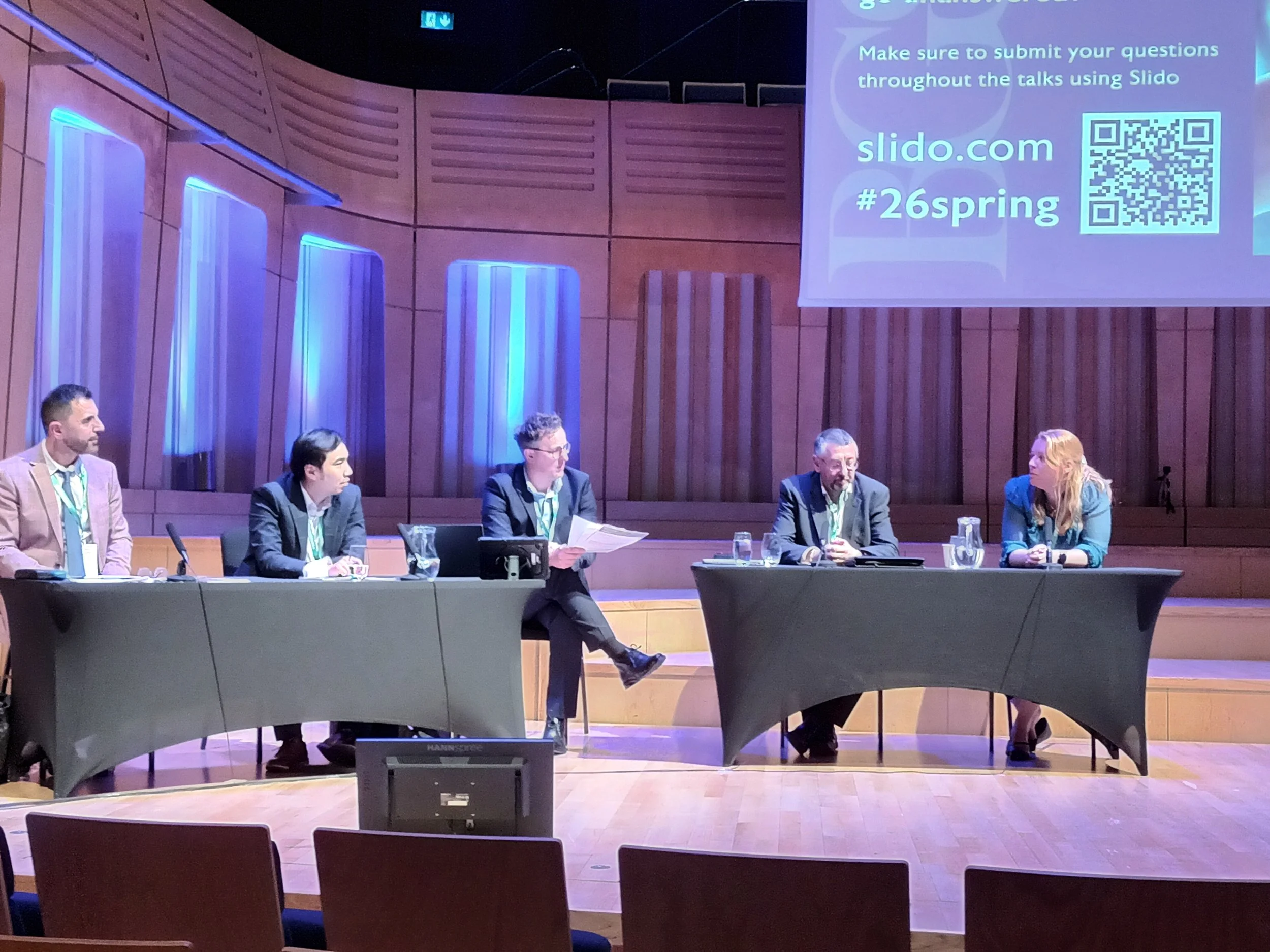
AGE Research Group members made a powerful impact at the British Geriatrics Society Spring Meeting in Cardiff on 23 April 2026, showcasing cutting‑edge sarcopenia research funded by the NIHR Newcastle Biomedical Research Centre.
A major highlight of the conference was a full‑day Sarcopenia Symposium, organised by the Sarcopenia and Frailty Research Special Interest Group and co‑chaired by AGE Research Group member Dr Christopher Hurst. Attracting several hundred delegates both in person and online, the symposium brought together national and international experts to explore the latest scientific evidence underpinning treatments for sarcopenia.
The programme spanned the translational research pathway, with sessions on ‘Understanding skeletal muscle and ageing’, ‘Interventions to improve skeletal muscle health in later life’ and ‘Implementing exercise and nutrition interventions in clinical practice’, concluding with a panel discussion on ‘The future of sarcopenia’.
Professor Rachel Cooper started the day by discussing the need to consider muscle ageing across the life course and outlining how population-based cohorts can help to advance understanding of muscle ageing. She showcased data from our ongoing MASS Lifecourse study and highlighted the value of this resource for catalysing translational research on sarcopenia.
Attention then turned to intervention strategies. Dr Christopher Hurst and Dr Antoneta Granic presented on the roles of resistance exercise training and nutrition, respectively, as interventions to improve muscle health in later life. Building on this, Professor Miles Witham then discussed the potential of drug treatments for sarcopenia and the need for inclusive research to find treatments that will benefit the widest range of older people. Here Professor Witham showed how important trials like MET-PREVENT and our recently launched REVITALiSE platform trial are to enable experimental studies of interventions that have the potential to improve muscle health in older people.
The symposium concluded with exciting real‑world impact data from the Benchmarking Exercise Programme for Older People (BEPOP) team. Results from Wave 3 showed major improvements in both muscle strength measurement and the quality of exercise programme delivery for people living with sarcopenia and frailty across the UK.
The day highlighted the strength and breadth of AGE Research Group activity across the translational pathway – from life course epidemiology and mechanistic understanding, through intervention development and clinical trials, to real‑world implementation. Engaging and working with clinical audiences is central to our commitment to translational ageing research, ensuring that new evidence is shaped by, and responsive to, clinical need. By contributing to these national discussions, we are working to accelerate the translation of high‑quality research into meaningful improvements in the prevention, diagnosis and treatment of sarcopenia.