
Sharing Insights from ADMISSION with National Audiences
The ADMISSION Research Collaborative is delivering the knowledge needed to transform NHS systems of care for people living with multiple long-term conditions (MLTC) admitted to hospital.
This major collaborative effort, led by the AGE Research Group and Ageing, Sarcopenia and Multimorbidity Theme within the NIHR Newcastle Biomedical Centre, involves colleagues from institutions across the UK including the PIONEER Health Data Research Hub and NIHR HealthTech Research Centre in Diagnostic and technology evaluation.
ADMISSION, funded by UKRI-NIHR between 2021 and 2025, continues at pace with a clear focus on delivering meaningful improvements in hospital care for people living with MLTC. Contributing to this vision, members of the team recently presented their latest insights at national conferences reaching different key audiences.
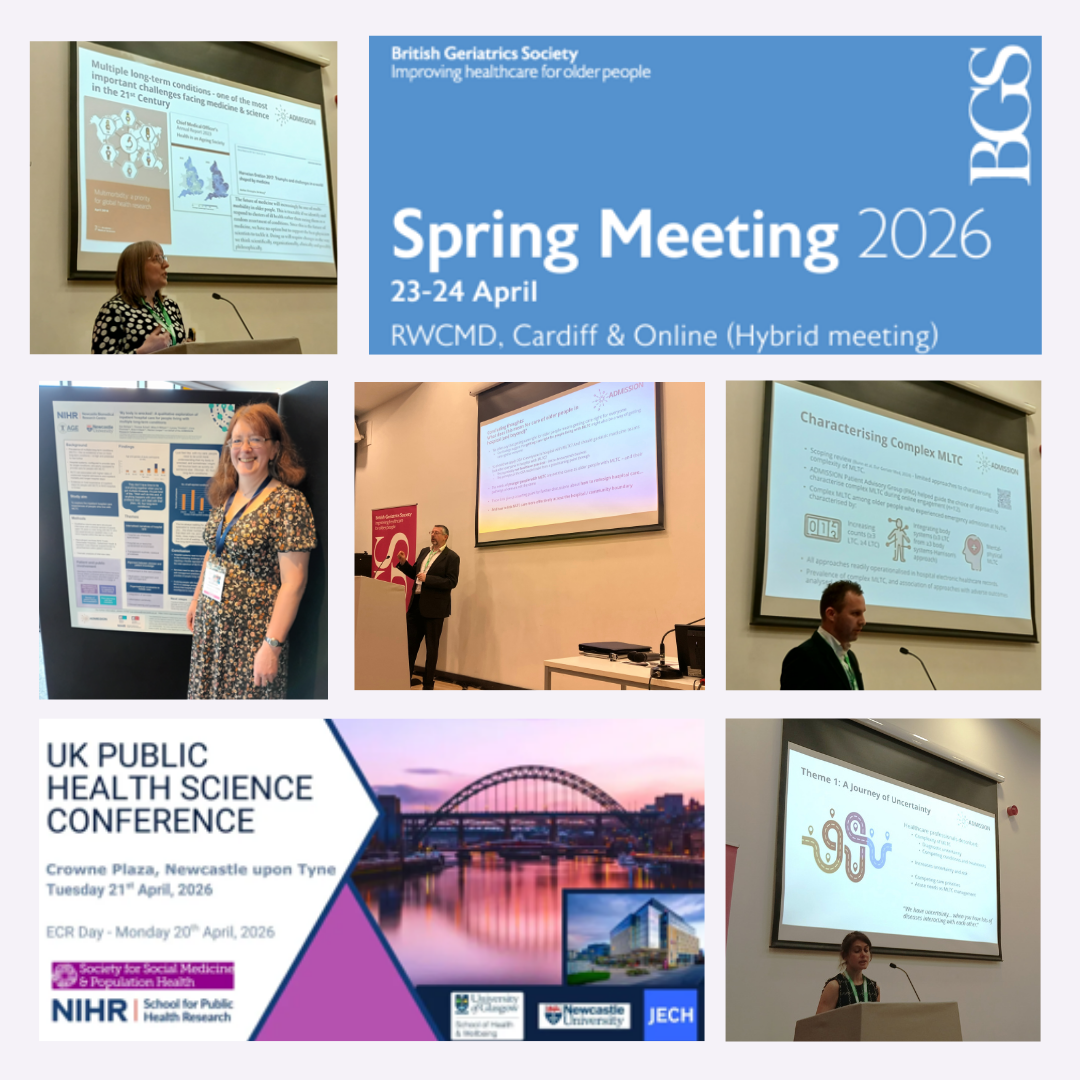
On Tuesday 21st April, Professor Rachel Cooper and Dr Sue Bellass presented key findings from ADMISSION at the UK Public Health Science Conference in Newcastle. At the conference, themed “Research to reality: Implementing public health science in practice and policy”, their posters outlined the scale of the challenge MLTC pose to hospitals in the North East of England and the wide‑ranging expectations and experiences of patients navigating inpatient care. The event provided a valuable platform to engage public health practitioners and spark important discussions.
Later that week at the British Geriatrics Society Spring Meeting in Cardiff, Professor Cooper and Dr Bellass were joined by Professor Miles Witham, Dr Jonny Bunn and Dr Sara Pretorius to deliver a dedicated research symposium showcasing ADMISSION. Speaking to a multiprofessional audience of experts in older people’s health and care, the team presented a comprehensive picture of what hospital care looks like for adults living with MLTC and highlighted stark patterns of inequality in MLTC, care pathways and outcomes.
Together, this growing body of work is challenging the long‑standing single‑condition model that underpins much of hospital care. Instead, ADMISSION is laying the foundations for new ways of thinking – and new approaches to service design – that better reflect the complex realities faced by people living with MLTC.
Reflecting on the impact of sharing the research at national forums, Dr Sue Bellass said:
“Having opportunities to present the breadth and depth of ADMISSION’s findings to such engaged audiences demonstrates both the importance and the value of the work within the Research Collaborative. It significantly increases the potential for our research to help transform systems of care for people living with MLTC admitted to hospital. The foundational knowledge generated by ADMISSION supports a radical shift away from traditional single‑condition care towards redesigned services that are fit for the future.”
With growing national interest and engagement, ADMISSION is helping to ensure that research evidence on MLTC in hospitals is translated into policy and practice and leads to improvements in care for people living with MLTC.