
REVITALiSE
Randomised Evaluation Platform Interventions to Treat Older People with Sarcopenia
The first platform trial aimed at finding novel and effective ways to treat sarcopenia

Sarcopenia, the age-related loss of muscle mass and strength, causes significant personal and health-economic burden. Exercise remains the only proven intervention, yet many older adults cannot sustain the intensity required.

REVITALiSE is an early-phase experimental medicine platform trial designed to efficiently evaluate novel therapies for sarcopenia, where there is a major unmet need.

By identifying and selecting the most promising interventions to progress to large randomised controlled trials, REVITALiSE aims to accelerate the development of effective therapies to treat sarcopenia.
REVITALiSE is an early phase experimental medicine platform trial designed and delivered by the AGE Research Group, supported by the NIHR Newcastle Biomedical Research Centre (BRC).
It comprises a series of parallel-group, individually randomised, controlled, open-label, proof-of-concept sub-trials. Each sub-trial will aim to enrol approximately 30 participants aged 65 years and older with probable sarcopenia.
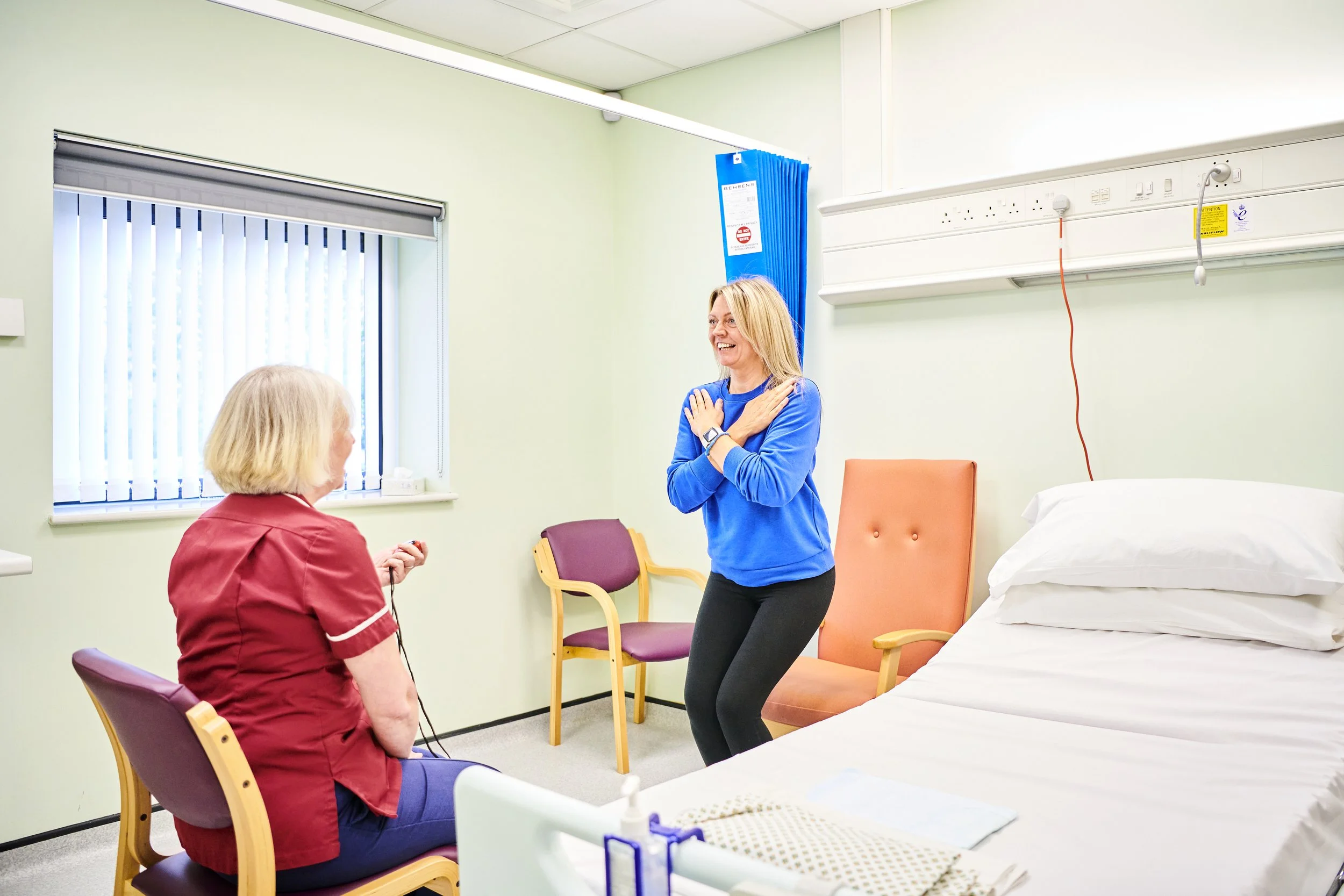
The platform is designed to evaluate a range of interventions, including exercise-based approaches, device-based therapies, and nutraceuticals. Participants receive either the intervention or usual care for 12 weeks.
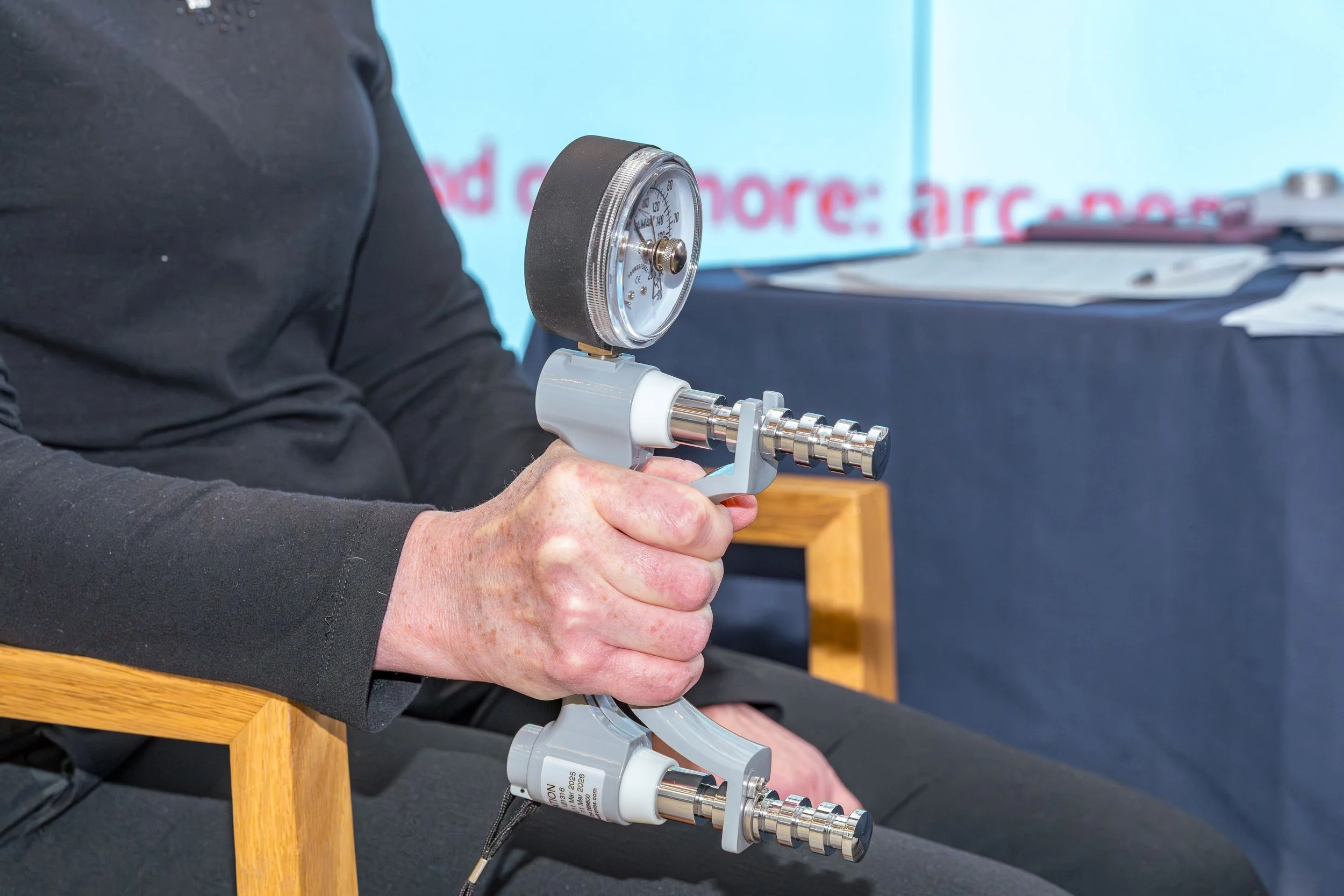
Outcome measures include between-group difference in four-metre walking speed, handgrip strength, the Short Physical Performance Battery (SPPB), and lean mass (assessed by Dual-energy X-ray absorptiometry) assessed at 12 weeks. Muscle biopsies of the vastus lateralis (thigh muscle) are also taken at baseline and follow-up. Additional mechanistic outcome measures are selected depending on the proposed mechanism of action for each intervention.
Our platform design marks a world-first for sarcopenia experimental medicine and will greatly accelerate translation of laboratory discoveries into clinical testing. REVITALiSE builds upon the AGE Research Group’s established expertise in designing and delivering clinical trials for and with older people, to advance discovery of novel interventions for sarcopenia:
The Acipimox study was an experimental medicine trial which tested whether supplementation with Acipimox (a medication used to lower cholesterol levels) improved skeletal muscle NAD levels and mitochondrial function in older people with sarcopenia, and assessed candidate outcomes for a future randomised controlled trial. Although acipimox did not improve mitochondrial function, the study demonstrated the feasibility of our experimental medicine approach, using muscle biopsies in interventional studies with older people living with sarcopenia.
MET-PREVENT was a phase II randomised controlled trial to test whether metformin (a medication commonly used to treat diabetes) can improve muscle strength and physical function in older people with muscle weakness. Mechanistic studies were embedded in the trial to better understand how metformin might improve muscle function and give us new knowledge on the biology of sarcopenia. Metformin did not improve muscle strength or physical performance, but MET-PREVENT showed that it is possible to design inclusive sarcopenia trials, with very high completion rates despite recruiting older people with frailty and very limited mobility.
The Leucine and ACE inhibitors for sarcopenia (LACE) trial was the first UK-delivered phase II multicentre randomised controlled trial that recruited older people with sarcopenia. LACE tested perindopril (a heart medication) and leucine (an amino acid supplement) as ways to improve muscle size and strength over one year. Neither perindopril nor leucine improved measures of muscle strength or size, demonstrating that these are unlikely to be helpful interventions in clinical practice for older people with sarcopenia.
Study Fact File
Chief Investigator: Prof. Miles Witham
Deputy Chief Investigator: Dr Claire McDonald
Funders: NIHR Newcastle Biomedical Research Centre
Enquiries: nuth.sarcopeniatrials@nhs.net
Collaborators:
Prof. Gavin Richardson, Professor of Cardiovascular Ageing, Newcastle University