
Highlighting the Power of Collaboration in MLTC Research
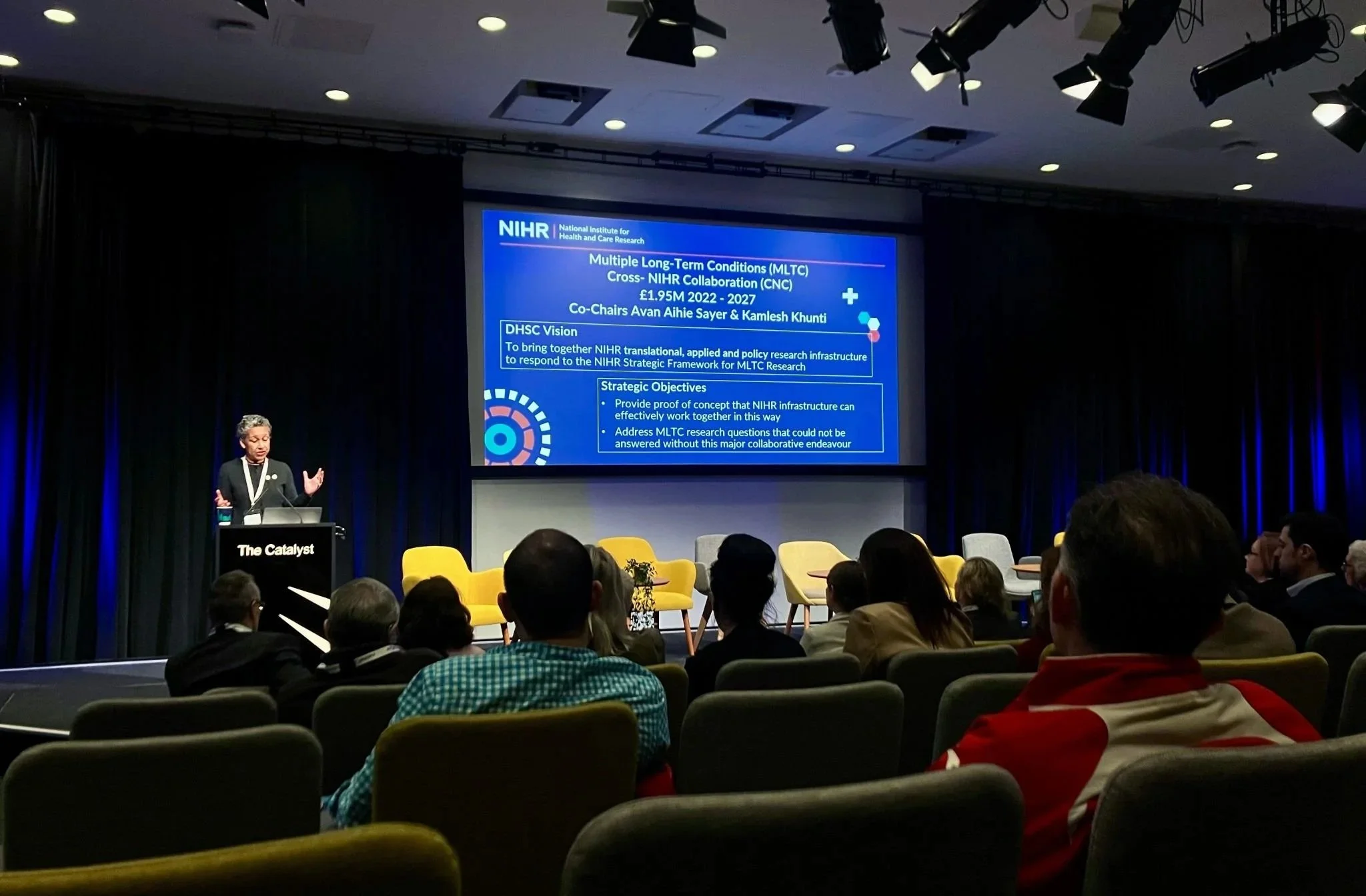
Professor Avan Aihie Sayer recently presented at two showcase events for AI-MULTIPLY, an NIHR funded research collaborative on artificial intelligence for multiple long-term conditions (MLTC), co-led by colleagues from Newcastle University and Queen Mary University London. At these events, Professor Sayer underscored the growing national priority of MLTC research and the importance of collaboration and inclusion in driving meaningful impact.
Keynote Address at the AI-MULTIPLY End of Project Event – February 2026
On 2nd February, Professor Sayer delivered a keynote lecture at the AI-MULTIPLY end of project event in Newcastle.
Her talk, titled “MLTC and the Health of the Nation: Why Research Collaboration Matters,” emphasised the rising national significance of MLTC and the urgent need for coordinated, inclusive research efforts. She highlighted how collaborative approaches, such as AI-MULTIPLY, ADMISSION (the research collaborative led by the AGE Research Group) and the Multiple Long-Term Conditions (MLTC) Cross- NIHR Collaboration (CNC), that she co-leads, are essential to driving meaningful improvements for people living with MLTC, particularly in addressing complexity, inequality, and systemwide challenges.
She further highlighted that MLTC are now central to major UK Government strategies, including the 10 Year Health Plan for England and the Life Sciences Sector Plan.
AI-MULTIPLY Community Showcase Event – March 2026
On 31st March, Professor Sayer was then privileged to contribute to AI-MULTIPLY's final community showcase. This event, held in London, was delivered in partnership with Social Action for Health and brought together members of the local and health research communities.
In her address, Professor Sayer made a compelling case for why MLTC must remain central to research and policy agendas. She emphasised that MLTC matter profoundly to the health of the nation, shaping outcomes not only for individuals and families but also for health and social care systems.
She also highlighted the vital role of MLTC research in answering the complex questions surrounding prevention, care, and quality of life. Collaboration is essential to maximising research impact, with research collaboratives, such as ADMISSION, providing excellent examples of what can be achieved when people with different expertise from different disciplines and sectors work together to achieve a common goal.
A central theme of Professor Sayer’s talk was the importance of research inclusion, ensuring that lived experience and diverse voices meaningfully shape research priorities and approaches.
The showcase reflected the wider ambitions of AI-MULTIPLY, demonstrating what is possible when community organisations, researchers, and partners co-produce knowledge with a focus on equity, relevance, and impact. These are key lessons that we are taking forward in the AGE Research Group’s ongoing work on MLTC.