
UK MLTC Symposium 2026
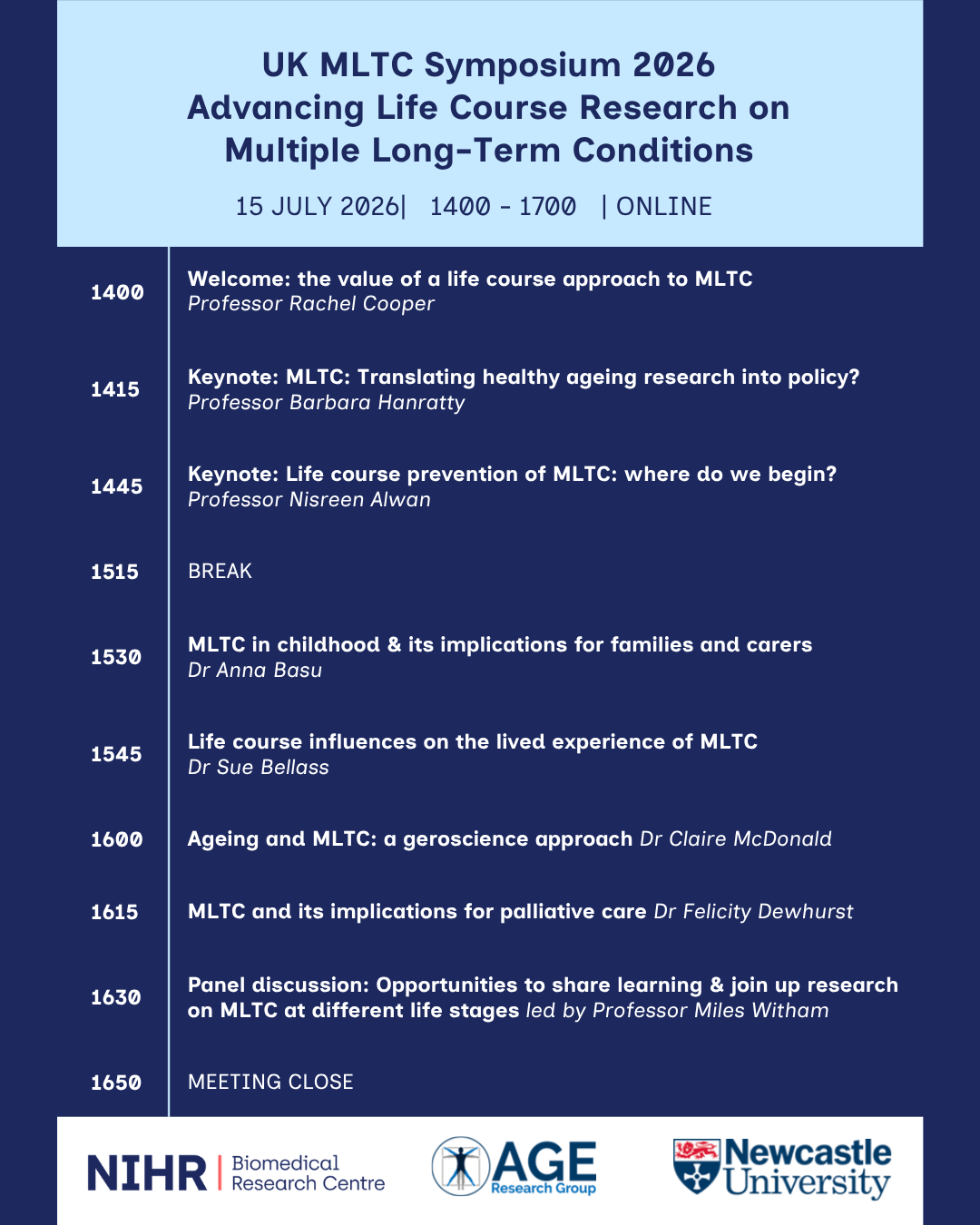
On 15th July 2026, members of the AGE Research Group and Ageing, Sarcopenia and Multimorbidity theme within the NIHR Newcastle Biomedical Research Centre hosted the 5th annual UK MLTC symposium.
Since the inaugural event in 2022, this online symposium has brought together people with a shared commitment to advancing MLTC research. While each year has focused on a different theme, the symposium always aims to:
bring together the flourishing, and rapidly expanding, MLTC research community
showcase recent advances in MLTC research
share learning and insights that build research capacity and maximise the impact of our national research efforts
support improvements in the health and social care of people living with MLTC and their families
This year we turned our attention to the question of how best to work together to advance a life course approach to MLTC. We were especially keen to explore the potential value of this approach in supporting delivery of the Government’s 10 Year Health Plan for England, particularly the shift from sickness to prevention.
Throughout the afternoon, the audience of more than 70 people from across the UK and beyond, heard from a range of excellent speakers who each showcased research on MLTC at different life stages. Collectively these presentations demonstrated the value of a life course approach to MLTC.
A recurring theme was the importance of interdisciplinary collaboration. Speakers emphasised the need to strengthen links between research conducted at different life stages, make greater use of diverse data sources, and apply a broad range of methodologies to address the complex challenges associated with MLTC.
There was also clear consensus that significant opportunities remain to advance research in this area. We look forward to continuing the conversations initiated at this year's event.
Thank you to everyone who attended and contributed to a stimulating and productive symposium.