
Qualitative Methods CoP publishes guidance for multiple long-term conditions researchers
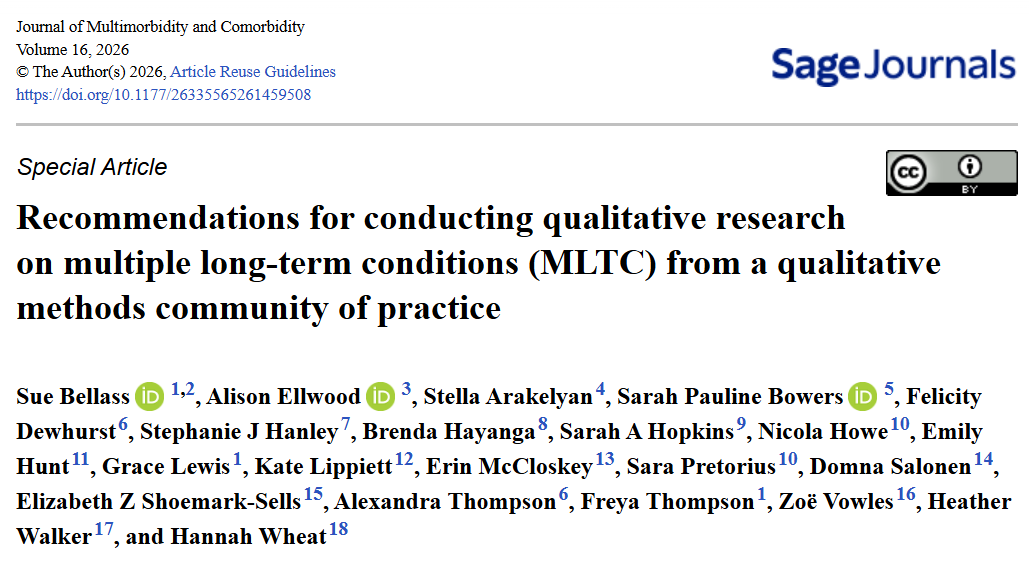
A Qualitative Methods in MLTC Research Community of Practice led by Dr Sue Bellass of the AGE Research Group has recently published guidance on conducting qualitative MLTC research in the Journal of Multimorbidity and Comorbidity. The paper, which is aimed at researchers new to the field, offers insights and practical tips from Community members to address some of the challenges inherent within this vibrant yet complex field of inquiry.
The Community, established in December 2022 as part of the UKRI-NIHR funded ADMISSION Research Collaborative, brings together early and mid-career qualitative researchers from 16 Higher Education Institutions and NHS Trusts across England, Scotland and Wales. Meeting online four times a year, the Community members share their expertise and experiences, covering a broad range of topics including researcher reflexivity, Public Involvement and Engagement (PPIE) in qualitative MLTC research, and creative methods such as digital storytelling. Recognising the value of sharing their learning beyond the Community, members pooled their knowledge and insights to write a paper that highlights the challenges of conducting qualitative research on MLTC and offers guidance to address the complexities. Structured according to a typical research trajectory, the paper offers reflections on theoretical frameworks, PPIE and the challenges of sampling from a highly heterogeneous population alongside tips on recruitment, data generation and analysis.
Sue commented “It has been a privilege to lead the Community of Practice for the last three and a half years, to witness the developing knowledge and expertise of our members, their commitment to high-quality research and their passion for improving the lives of people living with MLTC. Drawing together our collective experience in an output we could share with the wider MLTC research community seemed like the next logical step in our and AGE Research Group’s mission to support research capacity development in this field. I’d like to thank all the Community of Practice members including Deputy Lead Alison Ellwood and the senior researchers in ADMISSION who have supported this initiative throughout.”